HoneyPower Official Website › Blog › Labels With No Amounts
How To Read A Label That Prints No Amounts
A supplement panel with six names and no milligrams is not unusual, and it is not automatically a reason to walk away. It does change what you are buying, and the change is worth understanding before you pay rather than afterwards.
- A list of names without weights cannot be compared with the research it borrows its reputation from.
- It also cannot be compared with any other product, which is the commercial point of leaving it out.
- What a name-only list still tells you is which plants are present, which is enough to answer the exclusion question.
- The right response is to swap the unanswerable questions for answerable ones, and there are five of them.
- A refund window long enough to run an eight-week test is worth more on an unlabelled formula than on a labelled one.
Four tiers of label disclosure
Supplement labels fall into four tiers and the difference between them is how much arithmetic a reader is allowed to do.
| What the label does | What a reader can work out | What he cannot |
|---|---|---|
| Prints every ingredient with an amount | Cost per gram, comparison with trial doses, comparison with other products | Whether the material is what it says, without an assay |
| Prints a proprietary blend total | The order of ingredients by weight, and the total | How much of any single one, which is the point of the blend |
| Prints names with no amounts at all | Which plants are present, and whether any of them is one to avoid | Everything else, including whether the amounts are meaningful |
| Prints no ingredient list | Nothing. This is not a lawful supplement label in the United States | Everything |
Four tiers of disclosure. Most of the men’s vitality shelf sits in the second and third.
The first tier is what a careful buyer wants and what a minority of products provide. The second, the proprietary blend, is the commonest dodge: it looks like disclosure, gives a total weight and an order, and withholds the one number that would let anybody check anything.
The third tier is where a name-only ingredient graphic sits. It is more honest than a blend in one narrow respect, because it does not pretend to be a panel, and it is less informative in every other.
What is lost when the figures go
Four specific things, and it is worth naming them rather than gesturing at them.
The comparison with the research
Every claim a supplement makes borrows from studies of its ingredients. Those studies state their doses. Without a figure on the panel, the comparison that would tell a reader whether the borrowing is fair cannot be made at all.
The comparison with other products
Two bottles naming the same six plants might contain wildly different quantities. Without figures they look identical on a shelf, and the cheaper one is not obviously worse value because value cannot be calculated.
The cost per gram
A price divided by an amount is the only way to know whether a product is expensive. A price divided by nothing is just a price.
The ability to check an assay
Even a published certificate of analysis has limited use without declared amounts. An identity test can confirm a species is present. Only a declared quantity gives a laboratory something to verify.
The gap a reader fills in without noticing
There is a specific cognitive move that happens when somebody reads an ingredient list with no amounts, and it is the reason these labels work commercially.
A 2026 paper on ingredient-interpretation gaps in food supplements proposes a framework for it: a reader encountering a named ingredient fills the missing quantity in with whatever quantity he has previously heard associated with it. He has read somewhere that ginseng trials used grams. He sees ginseng on a label. Without deciding to, he assumes the label means something like what the trial meant.
That assumption is doing all the work, and it is the reader’s own. Nothing on the label stated it, so nothing on the label is untrue. This is the most elegant part of the arrangement, and it is worth recognising in yourself rather than resenting in a manufacturer.
Read the HoneyPower ingredient list with the trial doses beside it
Six names, no amounts, and the published human dose for each one printed alongside so you can do the arithmetic yourself.
One bottle $69 · six bottles $294 · 180-day money-back guarantee
Order HoneyPower On The Official WebsiteTwo capsules a day · 60 per bottle · lot HON-26/MY-5579
What a name-only list still tells you
Not everything is lost, and a reader who treats a name-only list as worthless throws away the part of it that matters most.
It tells you which plants are present, and that is enough to answer the single most important question anybody should ask of a supplement: is there anything in here I should not take? A bee product allergy, an anticoagulant, a medicine cleared by CYP3A4, a history of liver disease. All four of those are answerable from names alone.
It also tells you whether the formula is coherent. Six plants that all appear in the same trial literature is a different proposition from six plants assembled because they sound impressive, and a reader who looks each one up can tell the difference in ten minutes.
And it tells you what the manufacturer thinks is worth advertising. An ingredient graphic is a marketing document, so the order is not accidental.
Five questions to ask instead
The practical method is substitution. Each unanswerable question has an answerable one standing behind it.
| Instead of asking | Ask | Because |
|---|---|---|
| Is this dose effective? | Is the refund window long enough to find out? | The first question has no answer without a figure. The second always has one |
| Which ingredient makes it work? | Is there anything here I should not take? | The exclusion question is answerable from names alone |
| Is it good value? | Is the smallest pack affordable as an experiment? | Value per gram needs a gram. Affordability does not |
| Does the research support it? | Does the page cite human trials with the doses attached? | A citation without a dose is hiding the comparison |
| Is the brand trustworthy? | Does it publish anything against its own interest? | A page that only agrees with its bottle is an advertisement with subheadings |
Five substitutions. Each replaces an unanswerable question with one that has an answer.
The fifth is the one that takes longest to check and tells you most. A site that publishes something against its own commercial interest has demonstrated a constraint on itself, and a constraint is the only evidence of good faith that costs anything to fake.
Why the refund window carries more weight here
On a product with printed amounts, a long refund window is a pleasant extra. On one without, it does structural work.
The reason is simple. If you cannot evaluate a formula on paper, the only way to evaluate it is to take it, and the only way to take it without risking money is a window long enough to reach a conclusion. Every trial behind the ingredients in this category measured at eight to twelve weeks of daily dosing.
So a thirty-day returns policy on unopened bottles is not a guarantee in any useful sense: it expires before an honest test could finish, and it excludes the bottles you would have had to open to run one. A window of several months that explicitly includes empty bottles is a different instrument, and it is the single most informative commercial term on a product whose panel tells you nothing.
Write down three scores out of ten before the first capsule: afternoon energy, sleep quality and drive. Keep everything else still for eight weeks. Score the same three every Sunday. Decide at week eight on what you wrote down rather than on what you remember, and claim the refund if the answer is no.
The one category where this matters more
Everything above applies to any supplement. Men’s vitality products carry one extra consideration and it is a serious one.
The United States Food and Drug Administration maintains a standing public list of sexual enhancement products found to contain undeclared drug ingredients. Every product on it was sold as a botanical supplement, and several contained prescription-strength PDE5 inhibitors that were not on the label.
That is not a reason to avoid the category. It is a reason to buy from a seller with a traceable checkout, a telephone number that answers and a documented refund procedure, rather than from a marketplace listing of unknown provenance. An evidence-based review of ingredients in male supplements and the NCCIH guidance on using supplements wisely are both worth reading before a first purchase in this category.
A worked example on the bottle beside this article
This website sells a product that fails the first test in this article, and saying so here rather than nowhere is the whole reason the article is worth reading.
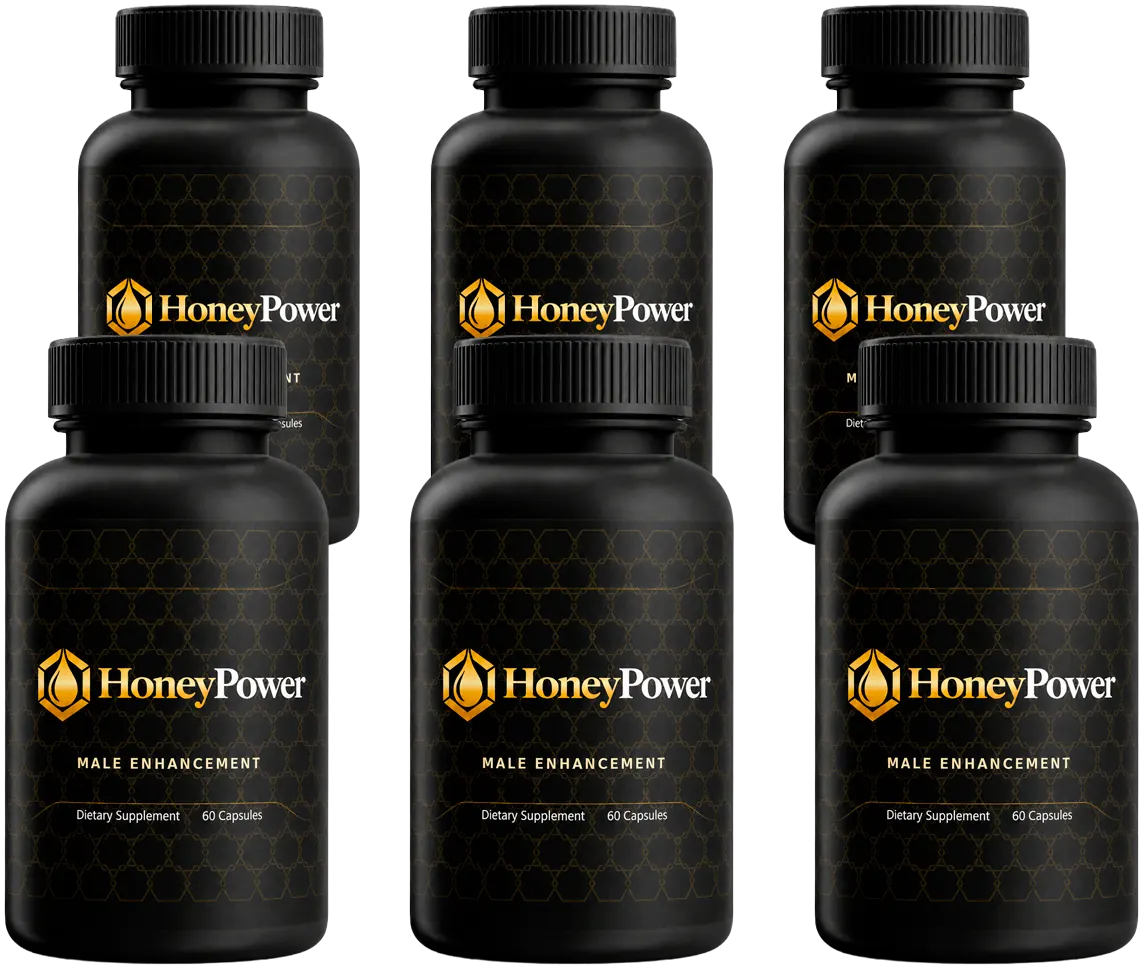
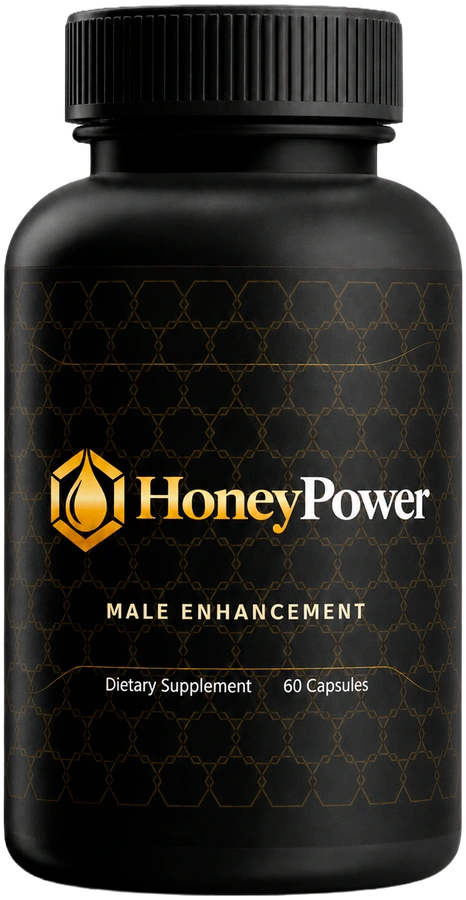
HoneyPower names six botanicals on the seller’s own ingredient graphic and prints an amount for none of them. It sits in the third tier of the table above. The comparison with the research cannot be completed, the cost per gram cannot be worked out, and no assay could verify a quantity that was never declared.
What it does have is a coherent ingredient list, five of whose six members appear in the same trial literature; a stated serving of two capsules; a $69 entry price; a telephone number that answers; and a 180-day refund window that explicitly includes empty bottles. Run the five substitutions from the table above and those are the answers.
A reader who needs the figures should buy something that prints them, and that is a real option rather than a rhetorical concession. A reader who wants to try this particular blend anyway now knows exactly what he is and is not being told.
The four articles that put numbers on this are honey, ginseng, tribulus and icariin. Each one takes a single name off this panel and finds what the published human work actually gave.
References
- Alsawadi, 2026 (J Nutr): a proposed framework for how shoppers fill in what a supplement’s ingredient list leaves unsaid. PubMed record 42660500
- Balasubramanian and colleagues, 2019 (J Sex Med): a look at popular online testosterone-booster products. Across nineteen ingredients and the 191 studies behind the ten most common, 19% of the research involved people at all, and 46% of the 37 human studies found no change in testosterone. PubMed record 30770069
- Kuchakulla and colleagues, 2021 (Int J Impot Res): a systematic review that held the ingredients of popular testosterone and erection supplements up against the published evidence. PubMed record 32358510
- NCCIH, part of the NIH: consumer advice on choosing supplements with care and telling every health care provider what you take. nccih.nih.gov guidance
- NIH Office of Dietary Supplements: a plain-language primer on what supplements are, how they are regulated and how to use them safely. ods.od.nih.gov primer
- U.S. Food and Drug Administration: the agency’s running notices on sexual enhancement and energy products found to contain undeclared drug ingredients. fda.gov notices
- Petre and colleagues, 2023 (Nutrients): products sold for erectile dysfunction, analysed alongside a systematic review and meta-analysis of their ingredients and advice on sensible use. PubMed record 37686709