HoneyPower Official Website › Choosing A Male Vitality Supplement
Choosing A Male Vitality SupplementChoosing A Male Vitality Supplement
Eight tests, and the first one decides most of it: does the label print an amount for every ingredient?
Without that figure no comparison with the research is possible. Run on the bottle this site sells, the eight produce three fails, one that cannot be run and three passes.
Eight tests for any label, run at the end on the one this site sells.
Written by the HoneyPower Team at MyhoneypowerMedical review: Dr. Shawn Blick, MDRevised
Eight tests to run on any label in this category
Eight questions, ordered by how much each one tells you.
Each of these takes under a minute and can be done before paying. They are ordered by how much they tell you, not by how easy they are to run.
Does it print an amount for every ingredient?
The single most informative test, and the one most labels fail. A list of names without weights cannot be compared with anything, including the research it is borrowing its reputation from. A panel that prints figures can be checked in five minutes.
Is there a proprietary blend?
A blend gives one total weight for several ingredients, which means the cheapest one can make up most of it and nothing on the label would change. A blend and a missing panel are the same problem wearing different clothes.
Does it name the plant part and the extract ratio?
Root and leaf of the same species are different ingredients with different research behind them, and a 10:1 extract is ten times the material of a 1:1 at the same printed weight. A label that states neither has told you less than it looks like it has.
How do the printed amounts compare with the trial doses?
This is the test the previous three exist to make possible. Look up what the published human trials gave, and set it beside the panel. A tenth of a trial dose is a common finding and it is worth knowing before rather than after.
What is the claim, exactly?
“Supports” is a structure and function claim and is the ceiling a supplement may go to. Anything that reads like a treatment claim is either outside the rules or is being carefully worded to sound like one, and both are worth noticing.
Is there a named, checkable reviewer?
A byline is worth something only if you can find the person independently of the page he appears on. If a search returns nothing but that page, the byline is decoration. An organisation with a working address and a review date is a weaker sounding claim and a stronger one.
What is the refund window, and does it include opened bottles?
Every trial in this category measured at eight to twelve weeks. A thirty-day returns policy on unopened items makes an honest test impossible to run, which tells you what the policy is actually for.
Is there a published certificate of analysis?
Not a reference number: the document, with a named laboratory, an identity test per ingredient and a contaminant panel. Most products in this category do not have one, and a buyer who requires it has narrowed his shelf considerably.
Running the eight tests on the HoneyPower label
Eight tests run on the product this website stocks.
A buying guide published by a seller is worth reading only if it is willing to run its own tests on its own bottle. So here is that, in a table, with no softening in the middle column.
| Test | Result | What it means |
|---|---|---|
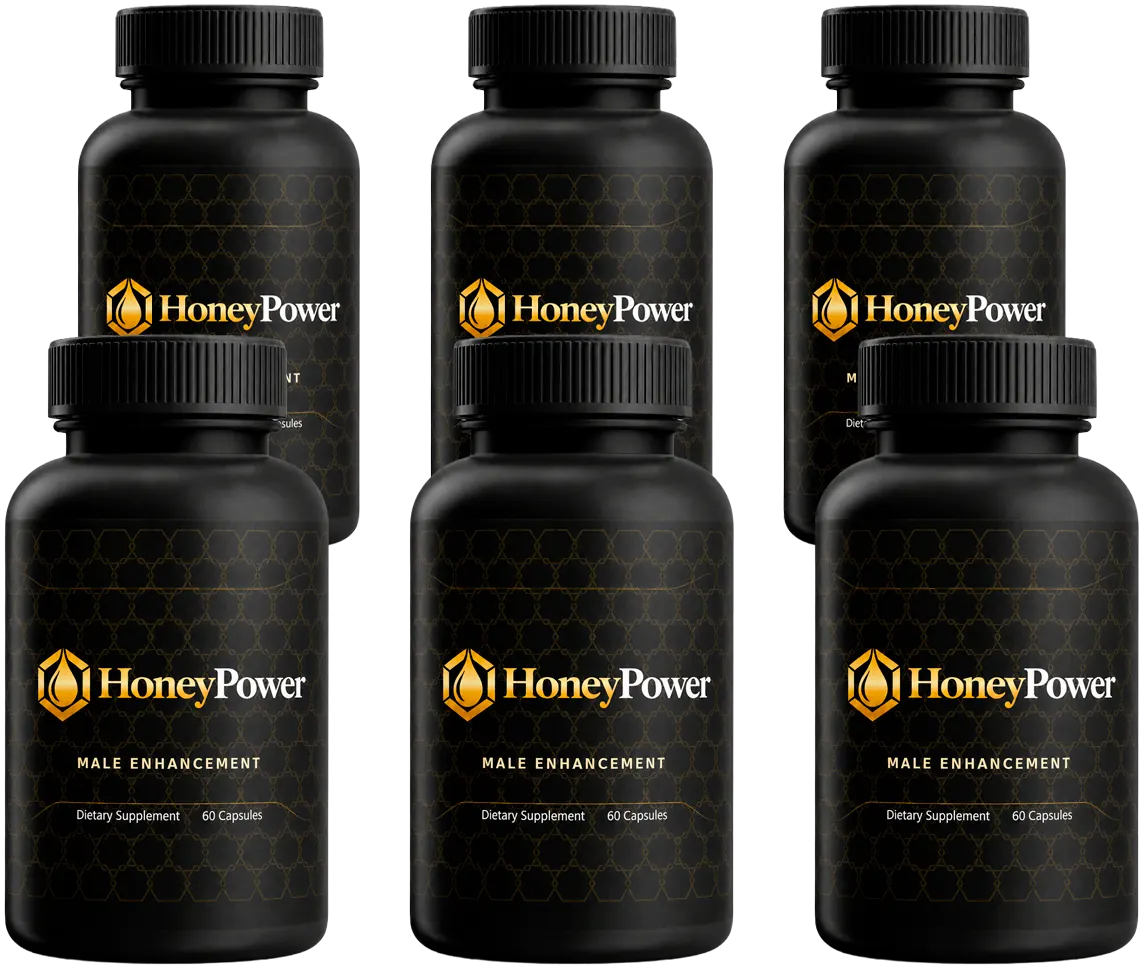
| Prints an amount for every ingredient | Fails | No figure appears on any panel of the artwork, including the seller’s own ingredient graphic |
| No proprietary blend | Not applicable | There is no blend because there is no panel. The absence is more complete than a blend would be |
| Names the plant part and extract ratio | Fails | Neither is stated for any of the six |
| Printed amounts against trial doses | Cannot be run | The comparison needs both halves, and one of them is empty |
| The claims are support claims | Passes | The nine benefit lines on the overview panel are structure and function statements about a healthy adult man |
| A named, checkable reviewer | Passes on this site | Pages here name Dr. Shawn Blick, MD, a physician, as medical reviewer, with the designation on the about page. The reviewer on the seller’s information site could not be confirmed and is not repeated |
| Refund window covers an honest test | Passes well | 180 days from purchase, empty bottles included, which is six times the length of the longest trial on the panel |
| A published certificate of analysis | Fails | A certificate reference is named; no laboratory, panel or result is published |
Eight tests: three fails, one that cannot be run, one not applicable, and three passes. Published on the site that sells the bottle.
What to do with a label that fails the first test
Three questions that replace the one that cannot be answered.
A failing first test is not automatically a reason to walk away, and pretending otherwise would make this guide useless: most of the category fails it.
What it does is change what you are buying. With printed amounts you are buying a specified quantity of specified material and you can compare it with anything. Without them you are buying a manufacturer’s judgement, which may well be sound and cannot be checked.
So the decision becomes a different one. Is the refund window long enough to run a fair test, is the entry price small enough that the experiment is worth running, and is there an order desk that answers if it goes wrong? Those three questions have real answers, and a buyer who is honest with himself about having moved to them has not been fooled by anything.
- Is the refund window longer than the eight weeks the research implies?
- Is the smallest pack cheap enough that the experiment is affordable?
- Is there a telephone number that answers, with a documented refund procedure?
- And, before all three: is there anything on the ingredient list you should not take?
Six things that look like evidence and are not
Six things that read as proof, and the one that catches careful readers.
- A long ingredient list. More names on a panel means less of each one, and the arithmetic gets worse with every addition.
- A citation with no dose attached. A trial of three grams a day does not support a capsule containing an unstated fraction of that, and a link with no number beside it is hiding the gap.
- A test-tube mechanism described as an effect. Icariin inhibits PDE5 in glassware. Nobody has run it against an erection endpoint in a person.
- A badge with no certifying body named. A seal is a certification when it carries an auditor and a number, and artwork when it does not.
- A struck-through price. It is a reference point the seller chose, not a former selling price, and no saving calculated from it means anything.
- A review score with no denominator. Four point eight out of five from an unstated number of buyers is not a measurement.
The third is the one that catches careful readers. A mechanism study is real science and it is genuinely interesting, and it says nothing whatever about what happens in a person. The icariin and PDE5 work is the clearest example in this category, and the only human trial of isolated icariin this desk could find ran open-label in a mood disorder and measured mood.
Questions about reading a label
What is the single most important thing on a supplement label?
What is wrong with a proprietary blend?
Does a longer ingredient list mean a better product?
How do I check a supplement is what it says?
Why does the refund window matter so much in this category?
Sources behind these eight tests
The surveys and trials each test is drawn from.
- Balasubramanian and colleagues, 2019 (J Sex Med): a look at popular online testosterone-booster products. Across nineteen ingredients and the 191 studies behind the ten most common, 19% of the research involved people at all, and 46% of the 37 human studies found no change in testosterone. PubMed record 30770069
- Kuchakulla and colleagues, 2021 (Int J Impot Res): a systematic review that held the ingredients of popular testosterone and erection supplements up against the published evidence. PubMed record 32358510
- Petre and colleagues, 2023 (Nutrients): products sold for erectile dysfunction, analysed alongside a systematic review and meta-analysis of their ingredients and advice on sensible use. PubMed record 37686709
- Borrelli and colleagues, 2018 (Drugs): a systematic review and meta-analysis of the herbal supplements studied for erectile dysfunction. PubMed record 29633089
- Lee and colleagues, 2021 (Cochrane Database Syst Rev): the Cochrane review of ginseng for erectile dysfunction. It pooled nine studies in 587 men followed for twelve weeks at most, and the combined effect fell short of the review’s own threshold for a difference a man would notice. PubMed record 33871063
- Neychev and Mitev, 2005 (J Ethnopharmacol): healthy young men took tribulus at 10 and 20 mg per kg of body weight a day in three doses, roughly 700 to 1,400 mg for a 70 kg man, and their androgen production was measured. It did not change. PubMed record 15994038
- Qureshi, Naughton and Petroczi, 2014 (J Diet Suppl): a systematic review tracing where tribulus got its name as an aphrodisiac and performance aid. PubMed record 24559105
- Dording and colleagues, 2008 (CNS Neurosci Ther): a pilot dose-finding trial of maca for sexual side effects of SSRI antidepressants, 1.5 g against 3.0 g a day; only the 3 g group improved. PubMed record 18801111
- Dell’Agli and colleagues, 2008 (J Nat Prod): laboratory work in which icariin derivatives blocked the human PDE5 enzyme in vitro, with no people involved. PubMed record 18778098
- Xiao, Wignall and Brown, 2016 (Am J Drug Alcohol Abuse): an open-label pilot study giving icariin at up to 300 mg a day for eight weeks to people with bipolar disorder and alcohol use disorder. It had no erection endpoint. PubMed record 26809351
- Cui and colleagues, 2015 (J Sex Med): a urologist’s walk-through of the ingredients found in best-selling men’s sexual health products. PubMed record 26531010
- Shoba and colleagues, 1998 (Planta Med): curcumin absorption with and without piperine in animals and human volunteers; in people, 20 mg of piperine taken with 2 g of curcumin raised curcumin’s blood level. The effect was measured on curcumin, not on honey, ginseng, maca, tribulus or icariin. PubMed record 9619120
- Alsawadi, 2026 (J Nutr): a proposed framework for how shoppers fill in what a supplement’s ingredient list leaves unsaid. PubMed record 42660500
- NCCIH, part of the NIH: consumer advice on choosing supplements with care and telling every health care provider what you take. nccih.nih.gov guidance
- NIH Office of Dietary Supplements: a plain-language primer on what supplements are, how they are regulated and how to use them safely. ods.od.nih.gov primer
- U.S. Food and Drug Administration: the agency’s running notices on sexual enhancement and energy products found to contain undeclared drug ingredients. fda.gov notices
Run the eight tests on HoneyPower yourself
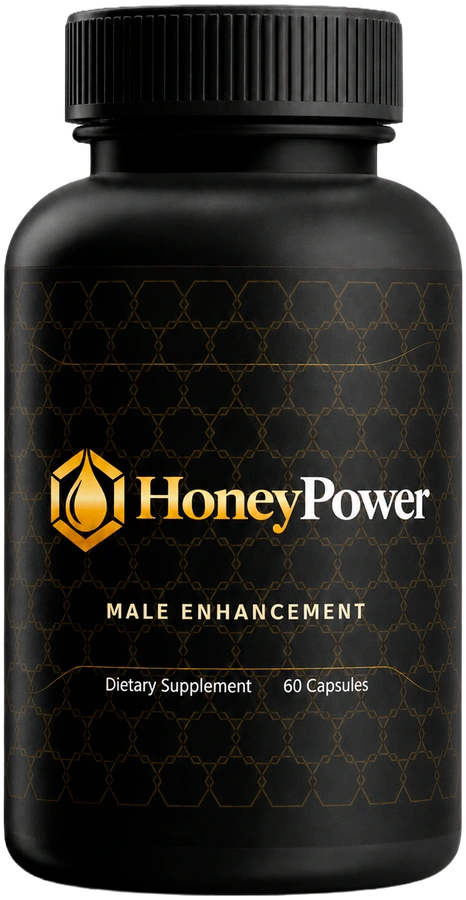
Six named botanicals, two capsules a day, and 180 days from purchase with empty bottles included.
One bottle $69 · six bottles $294 · 180-day money-back guarantee
Order HoneyPower On The Official WebsiteTwo capsules a day · 60 per bottle · lot HON-26/MY-5579