HoneyPower Official Website › Blog › Tribulus And Testosterone
Tribulus And Testosterone: What The Trials Found
Tribulus terrestris is on almost every testosterone-booster label sold. It has also been given directly to young men, at two doses, with their androgen production measured. The result is the clearest single finding in this whole category.
- Neychev and Mitev gave tribulus to young men at 10 and 20 mg per kg per day and found no influence on androgen production.
- A five-week trial in elite rugby players at 450 mg a day found strength and body composition no different from placebo.
- A phase IV trial at 1,500 mg a day did report improvement on a sexual function index in men with a diagnosed complaint. That is a different endpoint.
- A survey of the ten commonest testosterone-booster ingredients found 46 per cent of the human studies reported no effect.
- Low testosterone is diagnosed on repeated morning blood draws, not on how a man feels in the afternoon.
Why tribulus is on every label
Walk down the men’s supplement shelf and tribulus terrestris appears on a large share of what is there. It has been part of the category for decades and its presence is close to automatic.
The reason is partly historical. It arrived with a reputation from traditional use and from some early animal work, and the reputation travelled faster than the testing did. By the time the human trials were run, the ingredient was already established.
That makes it an unusually good test case. A plant this widely sold ought to have a settled answer behind it, and it does. The answer is just not the one the shelf implies.
The trial that measured it directly
Most supplement questions are hard because nobody ran the obvious experiment. This one is easy because somebody did.
Neychev and Mitev gave Tribulus terrestris to young men aged 20 to 36, at 10 and 20 milligrams per kilogram of body weight per day, split into three daily intakes. For a seventy-kilogram man that is roughly 700 to 1,400 mg a day. They measured androgen production.
It did not change. The paper’s title states the conclusion directly, which is unusual and useful: the aphrodisiac herb Tribulus terrestris does not influence androgen production in young men.
That is a small study and it is one result. But it is a direct test of the exact claim, in the exact population the claim is aimed at, at doses at the upper end of what a single-ingredient product delivers. A supplement industry that cites mechanism studies enthusiastically has been notably quiet about this one.
The wider trial record
Neychev is not the only data point, and the rest of the record is more interesting than a single negative result.
| Trial | Who it studied | Dose | What it found |
|---|---|---|---|
| Neychev 2005 | Young men, 20 to 36 | 10 and 20 mg per kg per day, in three intakes | No influence on androgen production |
| Rogerson 2007 | Elite rugby league players | 450 mg a day for five weeks | Strength and body composition no different from placebo |
| Kamenov 2017 | Men with sexual dysfunction | 1,500 mg a day, standardised to furostanol saponins | Improvement on a sexual function index in a phase IV multicentre trial |
| Santos 2014 | Men with erectile dysfunction | 800 mg a day for 30 days | Placebo-controlled; the paper reports its own result |
Four trials, two endpoints. The distinction between them is the whole subject of this article.
The rugby trial is worth dwelling on because it removed the usual excuses. Elite athletes, a controlled preseason training block, five weeks, a stated dose. Strength and body composition were no different from placebo.
The Kamenov phase IV trial is the strongest positive result in the literature: 1,500 mg a day, standardised to furostanol saponins, in men with sexual dysfunction, reporting improvement on a scored index. A placebo-controlled trial at 800 mg a day sits alongside it, and a 2025 systematic review collects the current position across both endpoints.
Two different claims wearing one name
The apparent contradiction between those trials dissolves as soon as the endpoints are separated, and separating them is the single most useful thing a reader can do with this ingredient.
| The claim | The endpoint it needs | What the trials show |
|---|---|---|
| Raises testosterone | Serum androgen measured in blood | Neychev gave it directly to young men and measured. It did not change |
| Improves sexual function | A scored questionnaire against placebo | Kamenov reported improvement at 1,500 mg a day in men with a diagnosed complaint |
| Builds muscle | Strength and body composition | Rogerson found no difference from placebo in elite athletes |
| Is an aphrodisiac | Depends entirely which of the above is meant | A systematic review of the claim itself found the evidence did not support it broadly |
Four claims that get made about one plant, and the four separate questions they actually ask.
Read the first two rows together. A trial can report improvement on a sexual function questionnaire while a different trial reports no change in serum testosterone, and both can be correct, because they measured different things.
What is not correct is citing the second trial to support the first claim. A systematic review of the aphrodisiac claim itself went looking for the roots of that reputation and found the evidence thinner than its ubiquity suggests.
See how HoneyPower handles the testosterone wording
The seller lists healthy testosterone among the things it supports. This desk quotes that as the seller’s wording and prints the Neychev result beside it.
One bottle $69 · six bottles $294 · 180-day money-back guarantee
Order HoneyPower On The Official WebsiteTwo capsules a day · 60 per bottle · lot HON-26/MY-5579
What the category survey found
One paper sets the baseline for this entire shelf and every buyer in the category should know the two numbers in it.
A 2019 survey of the best-selling online testosterone boosters identified the ten commonest ingredients and read the 191 studies behind them. Nineteen per cent of that literature involved humans at all. Of the 37 human studies, 46 per cent reported no effect on testosterone.
Those two figures explain a great deal about how this category is marketed. A sales page citing “studies” is usually citing the eighty-one per cent that were not run in people, and a reader who asks whether a cited study had human participants in it has already filtered out most of what he will be shown.
How low testosterone is actually diagnosed
This is the part that costs a supplement page money, and it is the part most worth reading.
The Endocrine Society’s clinical practice guideline is explicit: hypogonadism is diagnosed on morning blood draws, repeated on separate days, in men with consistent symptoms. It is not diagnosed on how a man feels at four in the afternoon, and it is not diagnosed from a questionnaire on a website.
That matters practically. A man who genuinely has low testosterone has a condition with a treatment, and a capsule is not it. A man whose afternoons are flat because he sleeps six hours and drinks four nights a week has a different problem with a different answer. Neither of them learns anything useful from a supplement label, and both learn something useful from a blood test.
What tribulus is not being accused of
Three things, stated plainly, because an article this negative about one ingredient owes them.
It is not accused of being unsafe. The safety literature on tribulus is quiet, with one published case of severe kidney injury in a young healthy man taking it deliberately, which is recorded on the side-effects page rather than buried.
It is not accused of doing nothing at all. The Kamenov trial is a real result on a real endpoint at a stated dose, and a man with a diagnosed sexual function complaint reading that trial is reading something relevant to him.
And it is not accused of being the reason any particular formula does or does not work. It is one ingredient among several on most labels, and on the bottle this website sells it is one of six.
Four questions worth asking of any tribulus row
Same method as every other ingredient, and this one has an extra question because of the endpoint confusion above.
- How many milligrams? The positive trial used 1,500 mg a day and the null strength trial used 450 mg.
- Standardised to what? The phase IV trial specified furostanol saponins per tablet, which is what made its material reproducible.
- Which claim is being made: testosterone, or sexual function? They are different endpoints with different results.
- If testosterone is claimed, does the page cite Neychev? A page that cites the positive trials and not the direct test has chosen what to show you.
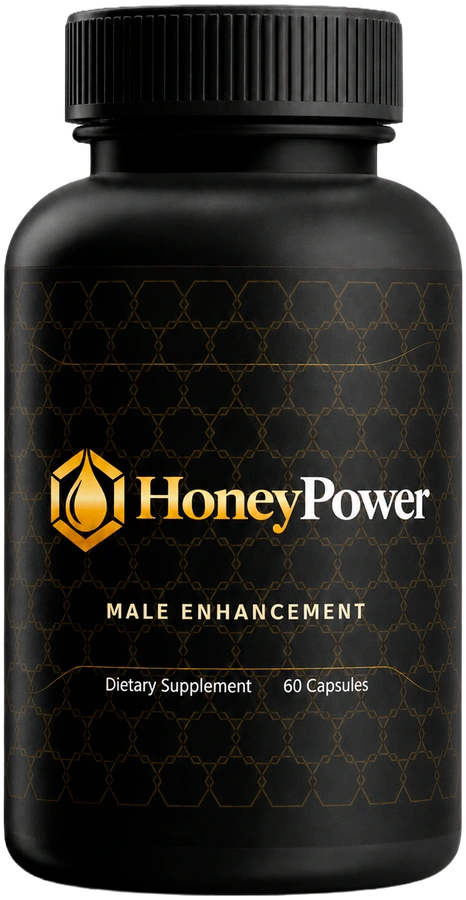
On the bottle this website sells: no figure is printed, no standardisation is stated, the seller lists healthy testosterone among its supports, and this desk prints the Neychev result beside that wording rather than repeating it. The full position is on the ingredients page, and the claims ceiling is set out on the disclaimer page.
The next one along is icariin, the test tube and the bedroom, which is the ingredient on this panel whose entire reputation rests on work done in glassware.
References
- Neychev and Mitev, 2005 (J Ethnopharmacol): healthy young men took tribulus at 10 and 20 mg per kg of body weight a day in three doses, roughly 700 to 1,400 mg for a 70 kg man, and their androgen production was measured. It did not change. PubMed record 15994038
- Kamenov and colleagues, 2017 (Maturitas): a prospective, randomized, double-blind, placebo-controlled trial of tribulus in men with sexual dysfunction, two 250 mg film-coated tablets three times a day (1,500 mg a day), each tablet standardised to at least 112.5 mg of furostanol saponins. PubMed record 28364864
- Rogerson and colleagues, 2007 (J Strength Cond Res): elite rugby league players took tribulus at 450 mg a day through five weeks of preseason training, and their strength and body composition ended up no different from placebo. PubMed record 17530942
- Santos and colleagues, 2014 (Actas Urol Esp): a randomized, double-blind comparison of tribulus and placebo for erectile dysfunction, 800 mg a day in two doses for 30 days. PubMed record 24630840
- Qureshi, Naughton and Petroczi, 2014 (J Diet Suppl): a systematic review tracing where tribulus got its name as an aphrodisiac and performance aid. PubMed record 24559105
- Vilar Neto and colleagues, 2025 (Nutrients): a systematic review of clinical trials of tribulus for erectile dysfunction and testosterone levels in men. PubMed record 40219032
- Balasubramanian and colleagues, 2019 (J Sex Med): a look at popular online testosterone-booster products. Across nineteen ingredients and the 191 studies behind the ten most common, 19% of the research involved people at all, and 46% of the 37 human studies found no change in testosterone. PubMed record 30770069
- Bhasin and colleagues, 2018 (J Clin Endocrinol Metab): the Endocrine Society’s practice guideline on testosterone therapy in men with hypogonadism. Low testosterone is diagnosed from morning blood tests repeated on separate days, not from how a man feels at four in the afternoon. PubMed record 29562364