HoneyPower Official Website › Blog › Piperine's Bioavailability Multiplier
Piperine’s Bioavailability Multiplier: What The Trials Measured
Black pepper extract is named last of six because its job is not to act on its own. It changes what happens to everything absorbed alongside it. That much is well established. What is less often said is that the size of the change is not one number: the published trials measured multipliers from roughly 30% to 2000%, depending entirely on what piperine was paired with.
- A landmark 1998 trial found 20 mg of piperine increased curcumin’s bioavailability in human volunteers by 2000%, from a near-undetectable baseline.
- A 2000 trial found 5 mg of piperine increased coenzyme Q10’s area-under-curve by roughly 30% after 21 days of combined dosing — a real effect, and a far smaller one.
- A 1991 crossover study found piperine measurably increased the bioavailability of two prescription drugs, propranolol and theophylline, in healthy volunteers.
- The mechanism is piperine’s inhibition of P-glycoprotein and CYP3A4, the transporter and enzyme system that governs how much of many oral compounds reach the bloodstream.
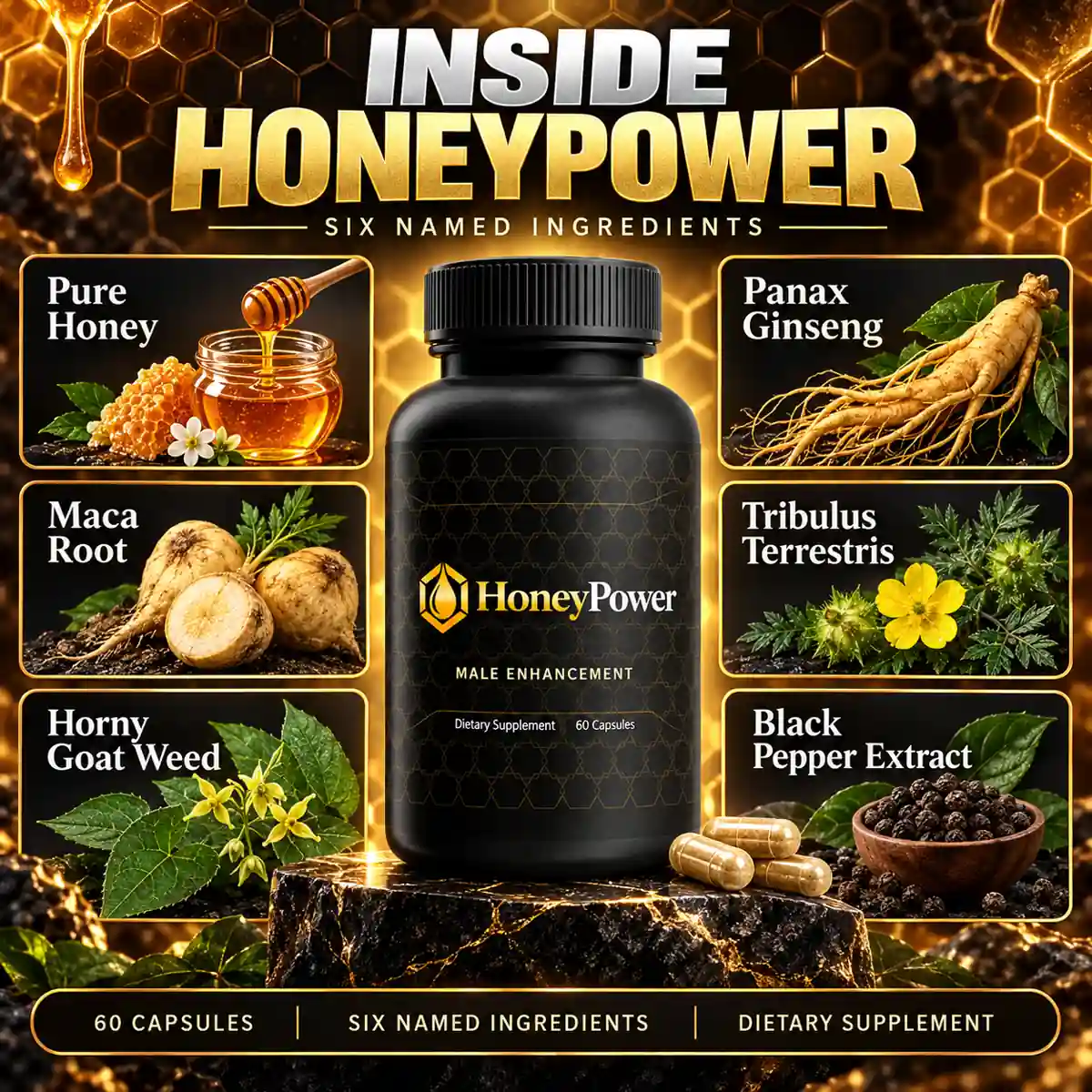
- No published trial has tested what piperine does to the absorption of honey, ginseng, maca, tribulus or horny goat weed specifically — the multiplier is compound-specific, and this bottle’s other five ingredients have never been the compound tested.
The claim behind the sixth ingredient
Black pepper extract, standardised versions of which are usually sold under trade names built around the word piperine, is included in supplement blends for one stated reason: it is supposed to increase how much of the other ingredients the body actually absorbs. That claim is not marketing invention. It has real trial support behind it. The part that gets lost in translation from research paper to sales copy is the size of the effect, which depends heavily on exactly what piperine is being combined with.
2000%: the number everyone quotes
the 1998 Shoba trial is the source of the figure that shows up across the entire bioavailability-enhancer industry. Curcumin, the pigment compound from turmeric, is notoriously poorly absorbed on its own because of rapid metabolism in the liver and intestinal wall. Shoba and colleagues gave 2 grams of curcumin alone to rats and to healthy human volunteers, then repeated the dose with 20 mg of piperine added.
| Subject | Curcumin dose | Piperine dose | Bioavailability change |
|---|---|---|---|
| Rats | 2 g/kg | 20 mg/kg | +154% |
| Human volunteers | 2 g | 20 mg | +2000% |
Same combination, two species, a more than tenfold difference in the size of the effect between rats and humans — a reminder that even within one compound pairing, the multiplier is not a fixed constant.
In human subjects given curcumin alone, serum levels were either undetectable or very low. That is the real reason the multiplier looks so dramatic: curcumin’s baseline absorption is close to zero, so even a modest absolute increase in absorbed material produces an enormous percentage change. That is an important detail for reading the 2000% figure correctly — it is a real, replicated finding, and it is also a figure inflated by how poorly curcumin absorbs to begin with.
30%: the number almost nobody quotes
a 2000 double-blind trial ran the same basic design against a different compound: coenzyme Q10, a far better-absorbed molecule than curcumin to start with. Badmaev and colleagues gave healthy adult male volunteers 90 mg or 120 mg of coenzyme Q10, alone or combined with 5 mg of piperine, across single-dose, 14-day and 21-day protocols.
Supplementation with 120 mg of coenzyme Q10 plus piperine for 21 days produced a statistically significant, approximately 30% greater area-under-the-curve than coenzyme Q10 with placebo. That is a real, measured, statistically significant effect. It is also nowhere close to 2000%, because coenzyme Q10 does not start from the same near-zero baseline curcumin does.
Piperine did not become twenty times weaker between the two trials above. The compound it was paired with started from a very different absorption baseline in each case, and the multiplier reflects that starting point as much as it reflects piperine’s own effect. A label that borrows the 2000% curcumin figure to describe what piperine does “in general” is quoting the largest number in the literature, not a typical one.
What it does to two ordinary prescription drugs
a 1991 crossover study moved the question from supplements to actual prescription medicines. Bano and colleagues gave healthy volunteers a single dose of propranolol (40 mg) or theophylline (150 mg), alone or combined with 20 mg of piperine daily for seven days, and measured the pharmacokinetics of each drug.
Piperine produced an earlier time-to-peak, a higher peak concentration, and a higher total drug exposure (area under the curve) for propranolol. For theophylline, piperine produced a higher peak concentration, a longer elimination half-life, and a higher area under the curve. The authors themselves noted this could, in principle, be used clinically to improve the systemic availability of these drugs and reduce the dose needed — but the same mechanism cuts the other way for a medicine with a narrow safety margin, where a higher blood level is a risk rather than a benefit.
See how HoneyPower lists Black Pepper Extract
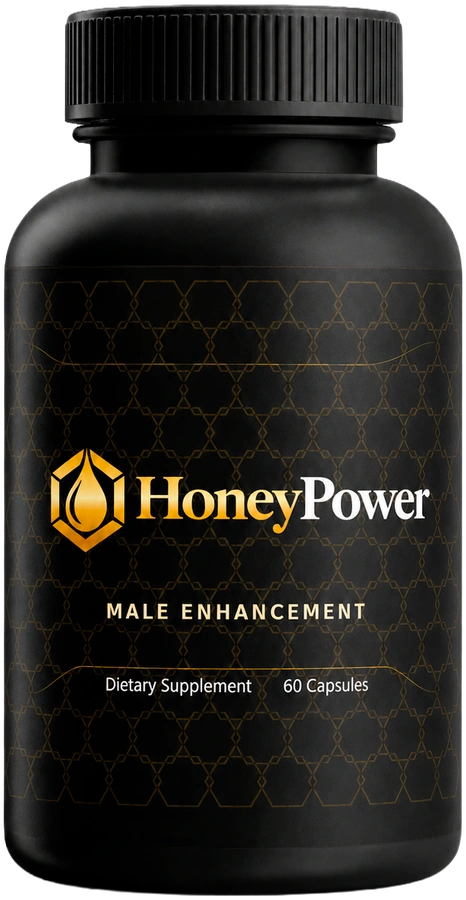
The seller names it sixth of six, with no piperine percentage and no stated weight. This desk prints the range of measured effects — from roughly 30% to 2000% depending on the pairing — rather than borrowing the largest number to describe the ingredient in general.
One bottle $69 · six bottles $294 · 180-day money-back guarantee
Order HoneyPower On The Official WebsiteTwo capsules a day · 60 per bottle · lot HON-26/MY-5579
Why the effect happens at all
a 2002 mechanistic study identified the biology behind every result above. Bhardwaj and colleagues found piperine directly inhibits both P-glycoprotein, a transporter protein that pumps compounds back out of intestinal cells before they can be absorbed, and CYP3A4, an enzyme in the liver and gut wall that metabolises a very large share of orally taken drugs and compounds before they reach general circulation.
Inhibit the pump and the enzyme, and more of whatever was swallowed survives the trip through the gut wall and liver intact. That single mechanism explains why piperine raises blood levels of chemically unrelated compounds — curcumin, coenzyme Q10, propranolol, theophylline — using one shared biological gate rather than four separate mechanisms. It also explains why the size of the effect tracks how much of a given compound that gate was blocking in the first place, which is a property of the paired compound, not of piperine alone.
Piperine is already used this way, deliberately, in a real medicine
This is not a purely theoretical mechanism confined to research papers. a phase III clinical trial tested Risorine, a combination product pairing piperine with the tuberculosis antibiotic rifampicin, specifically because piperine improves rifampicin’s bioavailability enough to allow a lower rifampicin dose while maintaining efficacy, with the stated aim of reducing rifampicin-related side effects. That a piperine-containing combination product has gone through phase III testing as a deliberate bioavailability strategy is the strongest evidence available that the underlying effect is real and clinically usable, not a supplement-industry exaggeration.
What has never been measured
Here is the honest limit of all five studies above: every one of them tested piperine against a single, specific compound — curcumin, coenzyme Q10, propranolol, theophylline, rifampicin. None of them tested piperine against pure honey, Panax ginseng, maca root, Tribulus terrestris, or horny goat weed, the five ingredients piperine actually shares a capsule with on this label.
That gap matters because, as the curcumin-versus-coenzyme-Q10 comparison shows, the multiplier is specific to the compound being enhanced, not a general property that transfers automatically to whatever else is in the same capsule. Whether piperine meaningfully increases the absorption of any of this product’s other five named ingredients is, as far as the published literature goes, an open question rather than a demonstrated fact. It may well do something — the mechanism (P-glycoprotein and CYP3A4 inhibition) is broad enough that some effect on some of them is plausible — but “plausible” and “measured at 2000%” are different claims, and a label is not entitled to borrow the second to describe the first.
There is a fair objection to treating that gap as disqualifying, and it deserves a straight answer rather than a dismissal. Ginseng, maca, tribulus and horny goat weed are all, in different ways, poorly characterised on this label — no stated extraction ratio, no stated standardisation, in several cases no stated species or growing region, as this website’s other ingredient articles document at length. A compound that is poorly absorbed to begin with, the way curcumin was in the 1998 trial, is exactly the kind of compound where a piperine effect would be largest if one exists. So the honest position is not “piperine does nothing here.” It is “nobody has measured it, the mechanism suggests it plausibly does something, and the size of that something cannot be estimated from a curcumin trial or a coenzyme Q10 trial run on a different compound entirely.”
Four questions worth asking of any piperine row
- Is a piperine percentage or milligram figure stated? Standardised extracts (commonly 95%+ piperine) are what the trials above actually tested; a raw “black pepper extract” weight is not the same claim.
- Which compound is the enhancement claim being made about? A 2000% figure belongs to curcumin specifically, not to bioavailability enhancement in general.
- Do you take a prescription medicine, especially one with a narrow safety margin? The propranolol and theophylline data show piperine can meaningfully raise drug blood levels.
- Has this specific ingredient combination been tested? No published trial has measured piperine’s effect on any of this label’s other five named ingredients.
Piperine’s bioavailability effect is real, mechanistically explained, and even used deliberately in an approved combination medicine. It is not, however, one fixed multiplier that can be quoted for any pairing: the published range runs from roughly 30% for coenzyme Q10 to 2000% for curcumin, and the difference tracks how poorly each compound absorbed to begin with. This label’s own pairing — piperine alongside honey, ginseng, maca, tribulus and horny goat weed — has not been the subject of any of the trials that produced those numbers.
References
- Shoba G, Joy D, Joseph T, Majeed M, Rajendran R, Srinivas PS. Influence of piperine on the pharmacokinetics of curcumin in animals and human volunteers. Planta Med. 1998;64(4):353-6. PMID 9619120. Bioavailability increase: 154% in rats, 2000% in humans. https://pubmed.ncbi.nlm.nih.gov/9619120/
- Badmaev V, Majeed M, Prakash L. Piperine derived from black pepper increases the plasma levels of coenzyme Q10 following oral supplementation. J Nutr Biochem. 2000;11(2):109-13. PMID 10715596. 120 mg CoQ10 with piperine for 21 days produced roughly 30% greater AUC than CoQ10 with placebo. https://pubmed.ncbi.nlm.nih.gov/10715596/
- Bano G, Raina RK, Zutshi U, Bedi KL, Johri RK, Sharma SC. Effect of piperine on bioavailability and pharmacokinetics of propranolol and theophylline in healthy volunteers. Eur J Clin Pharmacol. 1991;41(6):615-7. PMID 1815977. https://pubmed.ncbi.nlm.nih.gov/1815977/
- Bhardwaj RK, Glaeser H, Becquemont L, Klotz U, Gupta SK, Fromm MF. Piperine, a major constituent of black pepper, inhibits human P-glycoprotein and CYP3A4. J Pharmacol Exp Ther. 2002;302(2):645-50. PMID 12130727. https://pubmed.ncbi.nlm.nih.gov/12130727/
- Patel N, Jagannath K, Vora A, Patel M, Patel A. A Randomized, Controlled, Phase III Clinical Trial to Evaluate the Efficacy and Tolerability of Risorine with Conventional Rifampicin in the Treatment of Newly Diagnosed Pulmonary Tuberculosis Patients. J Assoc Physicians India. 2017;65(9):47-51. PMID 29313577. https://pubmed.ncbi.nlm.nih.gov/29313577/