HoneyPower Official Website › Blog › Maca And Sexual Desire
Maca And Sexual Desire: What The Trials Measured That Weren’t About Testosterone
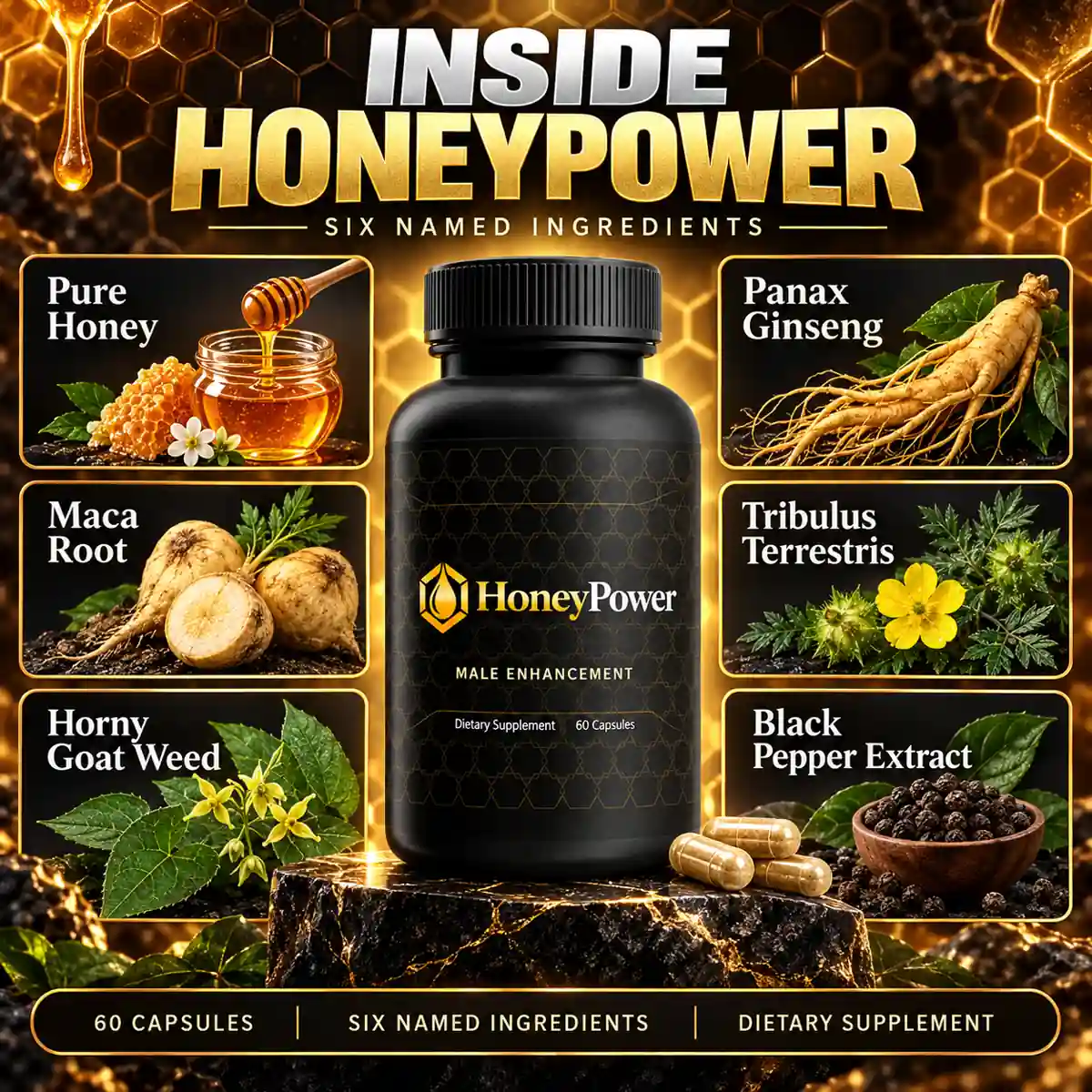
Maca root is third of the six names on the HoneyPower label. Its best-documented human research is not about testosterone and is not about physical stamina either — both are covered elsewhere on this blog. It is about a subjective desire score, measured against placebo, in trials running from 2002 to the present. Here is what those trials actually found, and what a 2010 systematic review and a more skeptical 2018 paper concluded about the whole body of evidence.
- The founding study in this area, Gonzales and colleagues in 2002, gave maca to healthy men for 12 weeks and found sexual desire scores rose against baseline, while testosterone did not change — the paper's own title names that gap.
- A 2009 randomised, double-blind, placebo-controlled trial in men with mild erectile dysfunction found maca extract improved subjective well-being and sexual performance scores compared with placebo.
- A 2010 systematic review in BMC Complementary and Alternative Medicine, screening the available trials for quality, found the evidence suggestive of a benefit for sexual desire but limited by small trial sizes and methodological weaknesses.
- A more recent 2018 paper in the Journal of Ethnopharmacology explicitly asked whether the hype around maca's reproductive health claims is justified, and answered with more caution than the marketing around the plant generally reflects.
- Desire, as measured on a self-report questionnaire, is a different outcome from erectile function, physical stamina, or testosterone level, and this article is specifically about the first of those.
Why desire is a separate question from testosterone or stamina
Maca shows up in three distinct bodies of human research, and conflating them is one of the more common ways marketing around this ingredient overstates its case. One line of research measures physical stamina and athletic performance, covered in a separate article on this product's sister site. A second measures testosterone and other hormone levels directly, where the consistent finding, starting with the very first trial covered below, is that maca does not appear to change them. A third, the subject of this article, measures a specific, validated self-report instrument for sexual desire, independent of both stamina and hormones.
This matters because a reader who sees "maca improves sexual desire in trials" and assumes that also means "maca raises testosterone" or "maca improves stamina" is combining three separate research questions into one. The trials below are specifically about desire, and the studies that measured hormones alongside desire are useful precisely because they let a reader see the two move independently.
The founding trial: desire up, testosterone unchanged
The paper that established this research area is Gonzales and colleagues, published in Andrologia in 2002. Its title states the finding directly: "Effect of Lepidium meyenii (MACA) on sexual desire and its absent relationship with serum testosterone levels in adult healthy men." Healthy men aged 21 to 56 took either 1,500 mg or 3,000 mg of maca a day for 12 weeks. Sexual desire, measured on a validated questionnaire, increased from the eighth week of treatment onward, at both doses, compared to baseline.
The second half of the title is the part most often left out when this study is cited in marketing. Serum testosterone and other reproductive hormones did not change over the same 12 weeks. The authors were explicit that the mechanism behind the desire effect, whatever it is, does not appear to run through the hormone most people assume a sexual-desire supplement would need to move. That is a genuinely useful, if unglamorous, finding: it tells a reader that if maca does something here, it is very likely not doing it by raising testosterone, a question covered in more depth in the tribulus and testosterone article on this same blog for a different ingredient.
| Trial | Who | Design | Desire outcome |
|---|---|---|---|
| Gonzales 2002 | Healthy men, 21–56 | 1,500 or 3,000 mg/day, 12 weeks, open-label | Desire score up from week 8; testosterone unchanged |
| Zenico 2009 | Men with mild erectile dysfunction | Randomised, double-blind, placebo-controlled | Well-being and sexual performance scores improved vs placebo |
| Systematic review, 2010 | Pooled available RCTs | Quality-screened review | Suggestive benefit; trials small and methodologically limited |
Figures above are drawn from each study's own reported results and the 2010 systematic review's summary of the trials it screened.
A 2009 trial in men with mild erectile dysfunction
A stronger design followed in 2009, when Zenico and colleagues published a randomised, double-blind, placebo-controlled clinical trial in Andrologia, specifically in men with mild erectile dysfunction rather than the healthy volunteers of the 2002 study. This design matters because it includes an actual placebo arm run in parallel, rather than only a before-and-after comparison, which controls for the expectation effect that any trial in this area has to account for.
The trial measured subjective well-being and sexual performance using self-report scores, and found that the maca extract group improved on these measures compared to the placebo group over the treatment period. Because it targeted men who already had mild erectile difficulty rather than healthy volunteers, its result is more directly relevant to a man considering this product for that specific concern than the 2002 trial's healthy-volunteer population is.
See maca beside the other five names
Maca is third of six ingredients, with no amount printed. The ingredients page sets every name beside the dose its own research used.
One bottle $69 · six bottles $294 · 180-day money-back guarantee
Order HoneyPowerTwo capsules a day · 60 per bottle
The 2010 systematic review, and what it actually concluded
Individual positive trials are a start, not a conclusion, which is exactly why a systematic review matters. Shin and colleagues published a systematic review in BMC Complementary and Alternative Medicine in 2010, specifically screening the available randomised controlled trials of maca for improving sexual function against methodological quality criteria.
The review's conclusion is more measured than a marketing summary of "maca works for desire" would suggest. It found the existing trials suggestive of a benefit, but noted they were few in number, generally small, and carried methodological limitations, things like unclear blinding procedures or short follow-up, that keep the evidence from being considered definitive. That is a common outcome for systematic reviews of botanical supplements generally: individual trials point in a direction, but the review process that is supposed to confirm a field's confidence finds the underlying evidence base thinner than the individual positive results suggest on their own.
The 2018 paper: is the hype justified?
A useful counterweight to the trials above is a 2018 paper in the Journal of Ethnopharmacology that asked, in its own title, whether the hype around maca's reproductive health claims is justified. Papers with this framing are worth reading specifically because their job is to push back against exactly the kind of confident marketing claim that individual positive trials can generate once removed from their original context and caveats.
The honest summary of where that leaves a reader: the desire-specific trials above are real, peer-reviewed, and several used a placebo control, which is meaningfully better evidence than most botanical ingredients in this category can claim. At the same time, the field's own systematic review from 2010 and the more skeptical 2018 paper both counsel against treating this as a settled, large-effect finding. A 2024 paper in Frontiers in Pharmacology exploring the chemical and pharmacological variability of Lepidium meyenii adds a further caveat familiar from other articles on this blog: maca sold commercially varies in form, color and preparation, and the trials above used specific extracts at specific doses that a label naming only "Maca Root" with no amount does not specify.
Reading the desire evidence honestly
Put together: maca has real, placebo-controlled human evidence for a self-reported sexual desire outcome, starting with a 2002 trial that explicitly ruled out testosterone as the mechanism, and continuing with a 2009 trial specifically in men with mild erectile dysfunction. A 2010 systematic review found this evidence suggestive but limited by small trial sizes, and a 2018 paper explicitly questioned whether the broader marketing hype around the plant is justified by the underlying data.
What that means for reading this product's label: maca's desire research is a genuinely distinct strand from its stamina research, covered in a separate article, and from testosterone claims generally, which this same body of research argues against for this specific ingredient. A reader weighing the desire question specifically has real trials to look at; a reader assuming those trials also establish a testosterone or stamina effect is reading more into the maca literature than the maca literature itself claims.
It is also worth naming what a self-report desire questionnaire can and cannot show. These instruments ask a participant to rate their own interest, drive or satisfaction on a numbered scale, typically at intervals over the trial. That is a legitimate, validated way to measure a genuinely subjective experience, and it is the standard tool the sexual-medicine field uses for this exact purpose. But a subjective score, even collected under a double-blind placebo-controlled design, is a different kind of measurement from a blood test or an imaging result, and it is more susceptible to expectation effects than an objective lab value would be, even when a trial's design works to control for that. None of the four papers here hides this; the 2010 systematic review flags exactly this kind of methodological limitation as part of why it stops short of calling the evidence definitive rather than merely suggestive.
Maca's founding human trial, Gonzales 2002, found sexual desire scores rose over 12 weeks at 1,500 and 3,000 mg while testosterone did not change, by the study's own design and title. A 2009 placebo-controlled trial in men with mild erectile dysfunction found improved well-being and performance scores. A 2010 systematic review called the evidence suggestive but limited by small, methodologically weak trials. A 2018 paper explicitly questioned whether the wider hype around maca is justified. This is desire-specific evidence, distinct from the separate stamina and testosterone questions covered elsewhere on this blog.
References
- Gonzales GF, Cordova A, Vega K, et al. Effect of Lepidium meyenii (MACA) on sexual desire and its absent relationship with serum testosterone levels in adult healthy men. Andrologia. 2002;34(6):367-72. PMID 12472620. https://pubmed.ncbi.nlm.nih.gov/12472620/
- Zenico T, Cicero AF, Valmorri L, Mercuriali M, Bercovich E. Subjective effects of Lepidium meyenii (Maca) extract on well-being and sexual performance in patients with mild erectile dysfunction: a randomised, double-blind, clinical trial. Andrologia. 2009;41(2):95-9. PMID 19260845. https://pubmed.ncbi.nlm.nih.gov/19260845/
- Shin BC, Lee MS, Yang EJ, Lim HS, Ernst E. Maca (L. meyenii) for improving sexual function: a systematic review. BMC Complement Altern Med. 2010;10:44. PMID 20691074. https://pubmed.ncbi.nlm.nih.gov/20691074/
- Is the hype around the reproductive health claims of maca justified? J Ethnopharmacol. 2018. PMID 28811221. https://pubmed.ncbi.nlm.nih.gov/28811221/
- Exploring the chemical and pharmacological variability of Lepidium meyenii. Front Pharmacol. 2024. PMID 38440178. https://pubmed.ncbi.nlm.nih.gov/38440178/
Twelve weeks is the span the desire trials ran
Three bottles is roughly the length of the longer maca desire trials. The 180-day window covers a proper look either way.
One bottle $69 · six bottles $294 · 180-day money-back guarantee
Order HoneyPowerTwo capsules a day · 60 per bottle