HoneyPower Liver Safety: 5 Checks Before You Start
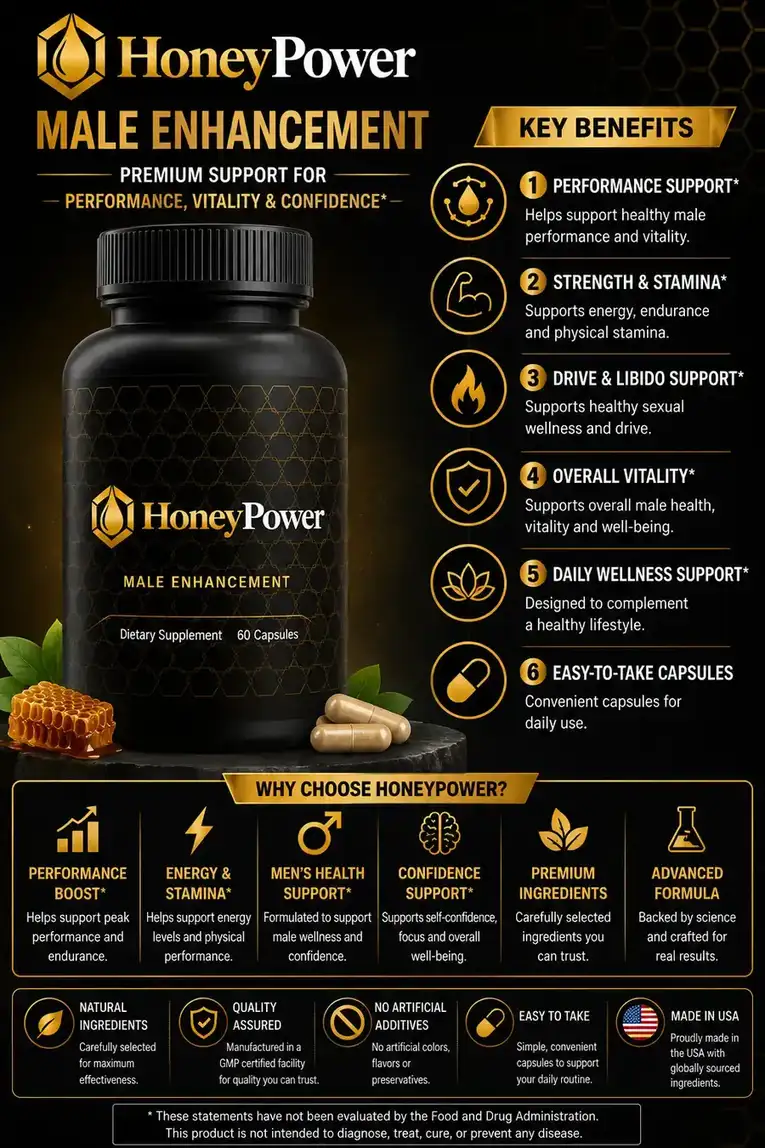
HoneyPower liver safety: no trial of the finished capsule exists, so no liver figure for the product can be printed. Ginseng, maca and horny goat weed each hold NIH LiverTox score E, an unlikely cause of liver injury, and tribulus holds E-star. Run the five checks below, above all if you already have liver disease.
- No trial has tested the finished capsule, so there is no product-level safety table.
- Ginseng, maca and horny goat weed each hold NIH LiverTox likelihood score E.
- Tribulus holds E-star: unproven but possible at high doses or in someone whose liver is already compromised.
- One case report describes severe kidney injury in a young healthy man taking tribulus. It is not a liver signal.
- The label prints no amount for any ingredient, so no trial figure can be scaled to a serving.
- Dark urine, pale stools or yellowing are reasons to stop and get help.
What does the record say about HoneyPower liver safety?
On HoneyPower liver safety, the record belongs to the plants and not to the capsule. No trial of the finished product exists, so nobody holds a tolerability table for it. What exists is a safety record for each of the six plants, most of it built at doses far larger than two capsules can hold.
That record is unusually quiet. Four of the six ingredients have their own chapter in LiverTox, a National Institutes of Health database that grades substances on how likely they are to cause clinically apparent liver injury. The scale runs from A, where the link is well established, down to E, where it is not.
What do the NIH grades say about HoneyPower liver safety?
| Ingredient | LiverTox grade | What it means |
|---|---|---|
| Panax ginseng | E | An unlikely cause of clinically apparent liver injury |
| Maca root | E | Same grade. A 12-week trial at 3 g a day in 175 adults reported no signal |
| Horny goat weed | E | Same grade. The usual product is one 250 mg or 500 mg capsule a day |
| Tribulus terrestris | E-star | Unproven but possible, at high doses or in someone whose liver is already compromised |
| Pure honey | No chapter | A food. Documented harms are regional grayanotoxin honeys and infant botulism, which do not reach an adult swallowing a capsule |
| Black pepper extract | No chapter | Present to change absorption, which is why it is covered under medicines |
From the side-effects page. Three of the four graded plants sit at the quiet end of the scale.
The one outlier in the HoneyPower liver record is not a liver signal at all. A case report describes severe kidney injury in a young healthy man taking tribulus deliberately. One case does not make a rate, and a single-ingredient course holds far more than a six-plant capsule can. It is recorded because it is on the record.
What can the grades not tell you about HoneyPower liver safety?
Three gaps sit between the literature and the bottle. The first is quantity. The artwork names six ingredients and prints no amount for any of them, so no safety figure from any trial can be scaled to this serving.
The second is combination. Every study cited tested one plant. Six together is a different experiment that nobody has run. The third is sourcing. An extract’s strength depends on the plant part, the solvent and the standardisation, and none of those is stated.
So for HoneyPower liver questions, the grades are reassuring about the plants and silent about this bottle. Both statements are true.
If your checks come out clear and your doctor agrees, the order page shows the packs and the 180-day guarantee.
See today’s price and guaranteeMyhoneypower is paid when you order through this button. The checkout shows the price that applies before you pay.
What are the 5 checks before you start?
- Existing liver disease. The one starred grade attaches to exactly that situation. If you have it, speak to your doctor before the first capsule.
- Your medicine list. Piperine inhibits CYP3A4, an enzyme that clears a large share of prescription medicines. Name black pepper extract to your prescriber.
- Warfarin. Ginseng at 1 g twice daily weakened warfarin’s effect in a randomised trial. Raise it with whoever manages your blood tests.
- Stay at two capsules. The tribulus and horny goat weed chapters both record liver injury reports. Neither the reports nor the doses make a case for exceeding the label.
- Know the stop signs. See the table below. Stop and get help if they appear.
When should you stop and call a doctor?
| Sign | What to do |
|---|---|
| Swelling, hives, wheeze or a rash after a dose | Stop and get it looked at the same day. Honey is a bee product |
| Dark urine, pale stools or yellowing | The classic signals of liver trouble. Unlikely, not impossible. Stop and get help |
| A medicine you have taken for years feels different | Stop the capsule and say so at your next appointment |
| Sleep going backwards | Move the dose earlier. If it persists, the capsule is not worth the trade |
From the side-effects page.
Our post on taking HoneyPower with alcohol and other pills covers the wider mix. Alcohol makes any test of the bottle unreadable.
Who should skip HoneyPower altogether?
Anyone under 18, and women who are pregnant or nursing. Anyone on an anticoagulant until a prescriber has been asked about ginseng by name. Anyone with a bee or pollen allergy. Anyone with existing liver disease, until a doctor says otherwise.
HoneyPower is a dietary supplement. It is not FDA approved, and no supplement is. It is not meant to diagnose, treat, cure or prevent any disease. The 180-day refund window means a man who does not get on with the capsule is not stuck with five more bottles. See the home page for the label wording.
Frequently asked questions
Is HoneyPower safe for the liver?
Ginseng, maca and horny goat weed each hold NIH LiverTox score E, an unlikely cause of clinically apparent liver injury. Tribulus holds E-star. No trial of the finished capsule exists.
What does the E-star grade on tribulus mean?
Unproven but possible, at high doses or in someone whose liver is already compromised. It is the one starred grade among the four chapters.
Should I avoid HoneyPower if I have liver disease?
Speak to your doctor first. The starred grade attaches specifically to an already compromised liver, and the site lists existing liver disease among the reasons to check.
Are there signs I should stop?
Dark urine, pale stools or yellowing. Stop and get help. Swelling, hives, wheeze or a rash after a dose also need same-day attention.
Is there a kidney warning?
One case report describes severe kidney injury in a young healthy man taking tribulus deliberately. It is a single case, not a rate, and it is on the record.
Can I take more than two capsules?
The site advises staying at two. The liver injury reports for tribulus and horny goat weed give no case for exceeding the label, and no amount is printed for any ingredient.
Our view
Our view is that HoneyPower liver safety looks quiet on paper and untested in the bottle. The plants have a mild record. The capsule has no record of its own.
If your health is good and your medicine list is short, there is little to weigh. If you have liver disease or take warfarin, the answer starts with your doctor, with the ingredient names in your hand.
Not published: a trial of the finished capsule, any amount for any ingredient and any liver result for the product.
Check with your doctor first if you have any doubt. The price and guarantee are on the order page.
See today’s price and guaranteeMyhoneypower is paid when you order through this button. The checkout shows the price that applies before you pay.
Last updated . HoneyPower is a dietary supplement. It is not an FDA-approved product, and no supplement is. It is not meant to diagnose, treat, cure or prevent any disease. See a doctor about any medical concern.
- A randomised trial of ginseng against warfarin: pubmed.ncbi.nlm.nih.gov/15238367
- The study showing what piperine does to drug handling: pubmed.ncbi.nlm.nih.gov/12130727
- A systematic review of ginseng adverse effects and interactions: pubmed.ncbi.nlm.nih.gov/12020172
- NCCIH's guidance on using supplements wisely: www.nccih.nih.gov/health/using-dietary-supplements-wisely